
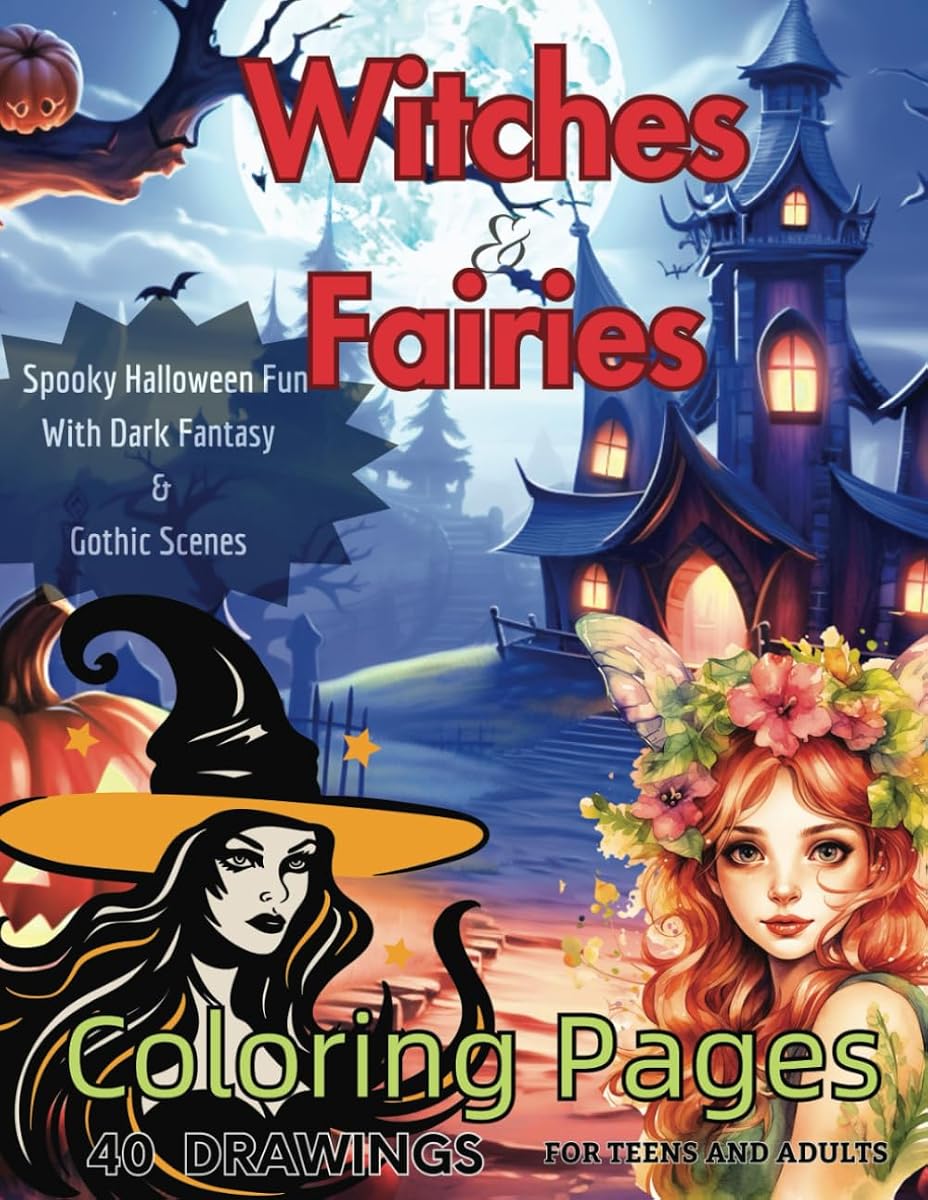
Walk into any bookshop and you will find colouring books arranged by theme: mandalas, animals, cities, swear words, gothic dolls. The theme is the easiest thing to choose and the least important thing for finishing a book. What matters is whether the pages suit your hand, your tools and the amount of time you realistically have.
Here is the checklist we use when we design a book — and the questions worth asking before you buy someone else's.
1. Start with the time you actually have
Be honest. If you colour in ten-minute bursts on the sofa, a book of dense, double-page forest scenes will sit untouched. If you like a long Sunday session, a book of simple 34-page outlines will feel thin.
A good rule: count the smallest distinct area on a sample page. If you cannot imagine filling it with the tools you own in one sitting, the book is too detailed for your current routine. You can always graduate to denser pages later.
2. Match the line weight to your tools
Bold outlines forgive. Fine outlines reward precision. Crayons and broad markers need space; fineliners and coloured pencils can handle detail. If you are buying for a child, look for thick lines and generous shapes. If you are buying for yourself and you mainly use pencils, a finer line is a pleasure rather than a chore.
Line weight also changes the mood. Heavy black lines read as playful and graphic; delicate grey lines read as illustration and invite shading. Neither is better — but they are different experiences.
3. Look at the paper, not just the cover
This is the specification most buyers never see online. Thin paper buckles under wet media and shows every pencil mark on the reverse. A book printed single-sided gives you permission to use markers without ruining the next page. If you mainly use dry pencils, most decent uncoated paper is fine.
When shopping in person, fan the pages and press a thumbnail into the paper. If it dents easily, it will emboss when you colour. When shopping online, check the listing for "single-sided" and the page count — a 150-page book with 75 designs is often double-sided.
4. Choose a subject you will still like in February
Seasonal books are wonderful and also a trap. A Halloween book bought in October is easy to love for six weeks. If you want a book that carries you through the year, pick a subject with range: portraits, botanical plates, architecture, animals with different textures.
Our own shelves are deliberately split. Halloween titles are seasonal and playful; Gothic Dolls and Vintage Girls work year-round because the subject is the portrait, not the holiday.
5. Ignore the age label (mostly)
Age labels are a rough guide to complexity, not a restriction. Plenty of adults prefer simple, bold pages because they find them relaxing. Plenty of twelve-year-olds want the intricate gothic stuff. Buy for the colourist's patience and interests, not their birth year.
That said, for very young children, check the shapes: small enclosed areas and tiny details are frustrating for hands that are still learning control. Our kids' titles use larger shapes and simpler scenes for exactly this reason.
6. The five-minute test
Before committing to a whole book, find a sample page (most publishers show one) and imagine colouring just one object. Does your hand relax or tighten? Do you immediately know which colour you want to use? If the answer is "I have no idea where to start", the page may be too complex or too empty.
The right book usually feels slightly easier than you expected. That is a feature. You want momentum, not a puzzle you have to solve before you are allowed to enjoy yourself.
Buy for the colourist you are on a Tuesday night, not the one you imagine you'll be on a retreat.
A short buying checklist
- Can I see a sample page, not just the cover?
- Is the line weight suited to my tools?
- Is it single-sided, and how many designs are actually included?
- Does the subject still interest me outside its season?
- Can I imagine finishing one page this week?
If you can answer yes to four of those five, you have found a book worth buying. The fifth is negotiable — sometimes the joy of a theme is worth the seasonal shelf life.